EMT Airway Management Review for the NREMT
A complete EMT airway management review for the NREMT: positioning, adjuncts, suctioning, oxygen delivery, ventilation, and the mistakes that cost points.
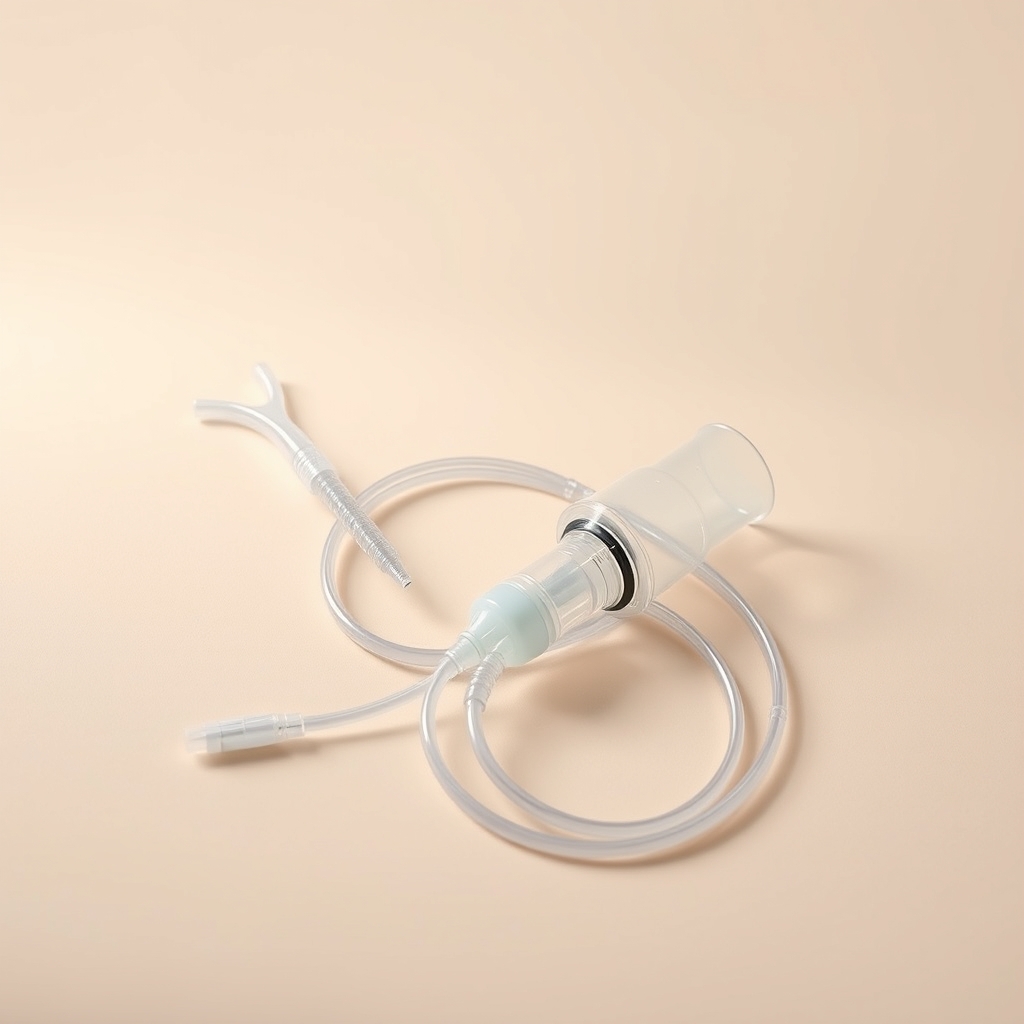
Airway management is the highest-priority skill on the NREMT and in the field. For the EMT exam, you need to open and maintain an airway, choose the right adjunct, suction effectively, deliver the correct oxygen device, and ventilate a patient who is breathing inadequately. Master those five actions in the right order and you will handle the majority of airway questions the NREMT can throw at you.
This review walks through the airway sequence the way the NREMT frames it, gives you decision rules you can recall under stress, and points out the errors that most often cost candidates points. If you want to know how airway fits into the rest of the exam blueprint, pair this with the EMT NREMT study guide.
Why Airway Dominates the NREMT
The NREMT cognitive exam weights the Airway, Respiration, and Ventilation domain heavily because airway compromise kills patients faster than almost anything else. On the practical side, the medical and trauma assessment stations both contain critical-fail criteria tied to airway: if you fail to open the airway, fail to provide high-concentration oxygen when indicated, or fail to ventilate an apneic patient, you fail the station regardless of everything else you did well.
That means airway is not a topic you can afford to be "pretty good" at. It has to be automatic. The good news is that the underlying logic rarely changes: assess responsiveness and breathing, open the airway, keep it open with an adjunct, clear it with suction, and support oxygenation and ventilation as the patient's condition requires.
The National Registry expects you to work within the EMT scope. That means manual maneuvers, basic adjuncts, suction, oxygen delivery, and bag-valve-mask (BVM) ventilation. Advanced airways such as supraglottic devices appear in some EMT curricula, but always defer to your local protocol and medical director on what you are authorized to place.
Opening and Positioning the Airway
The first question in any airway scenario is: is the airway open? For an unresponsive patient with no suspected spinal injury, the head-tilt/chin-lift is the standard maneuver. When you suspect trauma to the head, neck, or spine, use the jaw-thrust instead, keeping the head in a neutral, in-line position.
Positioning matters for responsive patients too. A patient in respiratory distress will often assume the tripod position instinctively; let them stay in the position of comfort, which is usually sitting upright. An unresponsive patient without spinal concern who is breathing adequately and has no trauma may be placed in the recovery position to help keep the airway clear of secretions.
A few positioning rules worth memorizing:
- Sniffing position aligns the airway axes in a supine adult with no trauma.
- Jaw-thrust is the maneuver of choice whenever spinal injury is possible.
- Padding under the shoulders can help maintain neutral alignment in small children, whose large heads flex the neck when supine.
- Never hyperextend the neck of an infant; their airway is easily kinked.
If a maneuver does not produce adequate air movement, reposition before you escalate. A poorly positioned head is the single most common reason a BVM fails to deliver breaths.
Airway Adjuncts: OPA and NPA
Once you have manually opened the airway, an adjunct helps keep it open so you can free your hands. The two EMT-level adjuncts are the oropharyngeal airway (OPA) and the nasopharyngeal airway (NPA).
The OPA is used only in patients with no gag reflex, which usually means deeply unresponsive patients. Inserting an OPA in someone with an intact gag reflex can cause vomiting and aspiration. Size it from the corner of the mouth to the angle of the jaw (or the tip of the earlobe). Insert it with the tip toward the roof of the mouth and rotate 180 degrees as you advance, or insert it sideways and rotate 90 degrees. In pediatric patients, insert it right-side-up with a tongue depressor rather than rotating.
The NPA is better tolerated in patients who still have a gag reflex but need airway support. Size it from the tip of the nose to the earlobe, lubricate it with a water-based lubricant, and insert it with the bevel toward the septum, usually into the right nostril. Avoid the NPA when you suspect a basilar skull fracture (signs include raccoon eyes, Battle's sign, or fluid from the ears or nose).
OPA vs. NPA at a glance
| Feature | OPA (oropharyngeal) | NPA (nasopharyngeal) |
|---|---|---|
| Gag reflex needed | Absent only | Can be present |
| Route | Mouth | Nostril |
| Sizing landmark | Mouth corner to jaw angle/earlobe | Nose tip to earlobe |
| Key contraindication | Intact gag reflex | Suspected basilar skull fracture |
| Lubrication | Not required | Required (water-based) |
| Typical use | Deeply unresponsive | Altered but with gag reflex |
Remember that adjuncts do not replace manual positioning; they supplement it. If you place an OPA and the patient gags, remove it immediately and consider an NPA or reposition.
Suctioning Secretions and Vomit
A blocked airway cannot be ventilated. If you hear gurgling, you suction; that sound means fluid in the airway. Use a rigid (Yankauer) catheter for the mouth and thick secretions, and a soft (French) catheter when you need to pass through an NPA or reach the nasopharynx.
The cardinal rules of suctioning:
- Suction only while withdrawing the catheter, not while advancing it.
- Limit each attempt to about 15 seconds in an adult (less in children and infants), because suctioning also removes oxygen.
- Insert only as far as you can see; do not blindly jam the catheter deep.
- Reoxygenate or ventilate between attempts.
- Have suction ready before you ever start ventilating an unresponsive patient.
If a patient has copious secretions you cannot keep ahead of, log-roll them (maintaining spinal precautions if indicated) and suction. Vomiting during resuscitation is common; anticipating it prevents aspiration.
Oxygen Delivery and Ventilation
Once the airway is open and clear, the question becomes whether the patient is breathing adequately. Assess rate, depth (tidal volume), and effort. A patient with a normal rate but shallow, ineffective breathing is ventilating inadequately and needs assisted ventilation, not just oxygen.
Match the device to the need:
- Nasal cannula: low-flow, roughly 1-6 L/min, for patients with mild need and adequate breathing.
- Non-rebreather mask: high-concentration oxygen at 10-15 L/min for patients who are breathing adequately but hypoxic or seriously ill.
- Bag-valve-mask (BVM): for inadequate breathing or apnea; attach to oxygen at 15 L/min with a reservoir to deliver high concentrations.
When you ventilate with a BVM, aim for adequate chest rise with each breath, delivered over about one second, at the guideline rate for the patient's age. Avoid over-ventilating: pushing too fast or too hard raises intrathoracic pressure, reduces cardiac output, and forces air into the stomach, increasing vomiting and aspiration risk. A two-rescuer BVM technique, with one person sealing the mask and the other squeezing the bag, produces far better tidal volumes than one rescuer alone.
Current resuscitation science from the American Heart Association emphasizes avoiding excessive ventilation and keeping ventilations coordinated with compressions during cardiac arrest. Know the current ratios for your certification level and practice them until they are reflexive.
Common Mistakes on the NREMT
Candidates lose airway points in predictable ways. Watch for these:
- Skipping manual positioning and reaching straight for an adjunct or BVM. Always open the airway first.
- Placing an OPA in a patient with a gag reflex. This is a classic distractor; check responsiveness and gag first.
- Using an NPA with a suspected basilar skull fracture. The scenario will give you the signs; catch them.
- Choosing a nasal cannula for a critically hypoxic patient who needs a non-rebreather, or a non-rebreather for a patient who is barely breathing and needs a BVM.
- Over-ventilating with fast, forceful squeezes.
- Not verbalizing suction and oxygen in the practical station. If you do not say it, the examiner cannot score it.
- Forgetting to reassess after each intervention. Airway is dynamic; a patient who improves may still deteriorate.
On the cognitive exam, read the vignette for the discriminating detail: gag reflex, trauma mechanism, skull-fracture signs, breathing rate and depth. Those details point to exactly one correct device or maneuver.
Study Plan and Next Steps
Build airway mastery in layers. First, memorize the sequence and the decision rules above until you can recite them. Second, practice the psychomotor skills hands-on: OPA and NPA insertion, suctioning, mask seal, and two-person BVM. Third, drill scenario questions so you learn to spot the discriminating detail fast.
A smart way to start is to find out where airway ranks among your weak areas. Take the free NREMT diagnostic, a one-time, 20-question, batch-graded quiz with no timer that shows you which domains need work. From there, if you want timed practice, detailed rationales, and topic-focused drilling, review what the full question bank and study features offer and check the subscription plans to pick the option that fits your timeline.
A sample one-week airway block might look like this:
- Day 1-2: Read this review and the EMT NREMT study guide; memorize the sequence.
- Day 3-4: Hands-on skills lab with a partner; practice mask seal and adjunct sizing.
- Day 5: Take the diagnostic to confirm airway is (or is not) still a weak domain.
- Day 6-7: Drill scenario questions and review rationales on missed items.
Repeat the cycle for other weak domains. Airway rewards repetition more than almost any topic because so much of it is muscle memory plus a handful of firm rules.
Scope note: This article is educational NREMT exam-prep, not medical advice or a substitute for your training program. Always follow your local protocols and medical director's direction in the field.
Frequently Asked Questions
When do I use an OPA versus an NPA?
Use an OPA only in patients with no gag reflex, typically deeply unresponsive patients. Use an NPA when the patient may still have a gag reflex but needs airway support. Avoid the NPA if you suspect a basilar skull fracture.
How long can I suction an adult airway?
Limit each suctioning attempt to about 15 seconds in an adult, and less in children and infants, because suctioning also removes oxygen. Suction only while withdrawing the catheter, and reoxygenate between attempts.
When should I switch from a non-rebreather mask to a BVM?
Use a non-rebreather for a patient who is breathing adequately but hypoxic. Switch to a bag-valve-mask when breathing is inadequate, shallow, or absent. Assess rate, depth, and effort, not just rate alone.
What is the most common airway mistake on the NREMT practical?
Skipping manual airway positioning before reaching for an adjunct or BVM, and failing to verbalize suction and oxygen so the examiner can score them. Always open the airway first and state your interventions out loud.
Which airway maneuver do I use for a trauma patient?
Use the jaw-thrust maneuver whenever spinal injury is possible, keeping the head in a neutral, in-line position. Reserve the head-tilt/chin-lift for patients with no suspected spinal trauma.
Related Articles

EMT Patient Assessment Review for the NREMT

EMT Practice Test Strategy: Get the Most From Every Question